US Delegation Exits UN Security Council Session as France Presents Statement
The United States walks out during France's UN Security Council remarks. US joins Russia and North Korea voting against human rights commissioner extension.
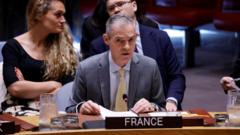
US Delegation Exits UN Security Council Session
In a significant diplomatic moment at the United Nations, the US walks out UN Security Council proceedings while France delivered its statement before assembled delegates. This notable departure underscored escalating tensions within the international body and raised questions about ongoing diplomatic relations among permanent members.
The decision by American representatives to leave the chamber marked a visible expression of disagreement during multilateral discussions. Such walkouts, while not unprecedented in UN history, demonstrate the heightened friction currently characterizing interactions between major world powers.
Voting Pattern Reveals Deep Divisions
The diplomatic standoff intensified when the United States joined Russia and North Korea in voting against a proposal to extend the mandate of the UN High Commissioner for Human Rights. This unusual alignment caught international observers' attention, as it represented a rare convergence of voting positions among these nations on such matters.
The decision to cast votes alongside Russia and North Korea presented a striking visual representation of the ideological and geopolitical divisions reshaping global governance structures. The human rights commissioner position traditionally enjoys broad international support, making the opposition from these three countries particularly noteworthy.
Implications for International Governance
The UN Security Council continues to serve as the primary forum for addressing global security concerns and humanitarian matters. When permanent members express disagreement through walkouts and opposing votes, it signals deeper rifts in multilateral consensus-building efforts.
The human rights commissioner's office plays a crucial role in monitoring global human rights situations and advocating for vulnerable populations worldwide. Opposition to extending this position's mandate raises concerns about the future direction of human rights advocacy within UN frameworks and the organization's ability to effectively address humanitarian crises.
Context of Rising Diplomatic Tensions
Recent months have witnessed intensifying disagreements among Security Council members on numerous international issues. The alignment of voting patterns, particularly when involving nations with historically opposing interests, suggests shifting dynamics in how countries navigate multilateral institutions.
France's remarks during the session apparently touched upon these tensions, prompting the American delegation's decision to withdraw. While the specific content of the French statement has not been fully detailed, the walkout indicates substantive disagreement with positions presented or broader concerns about the direction of UN discussions.
The Role of Permanent Members
The UN Security Council comprises five permanent members with veto power: the United States, Russia, China, France, and the United Kingdom. These nations hold disproportionate influence over international security matters and humanitarian decisions. When they vote in opposition to traditionally supported initiatives, such as human rights commissioner extensions, it reflects significant policy divergence.
The fact that the US walks out UN Security Council sessions alongside taking opposing votes suggests coordinated diplomatic messaging. Each nation carefully considers its public positions and visible actions within the chamber, understanding that such moves carry symbolic weight beyond their immediate procedural implications.
Global Response and Future Outlook
International observers and diplomatic analysts are closely monitoring these developments to assess whether they represent temporary friction or signal longer-term realignment in UN dynamics. The human rights commissioner extension will likely face renewed discussion, potentially with different voting outcomes if diplomatic negotiations continue.
These incidents collectively demonstrate the fragility of international consensus on human rights matters and the ongoing challenges facing the United Nations as it attempts to balance the interests of diverse member states while advancing universal humanitarian principles and governance standards.