Why Controlled Conflict With The US Could Benefit Iran
Iran may believe it can manage tensions strategically to pressure the US while avoiding full-scale war. Explore the geopolitical calculus behind this doctrine.
Iran's Strategic Calculus in Managing Controlled Conflict With The US
Iran's approach to its relationship with the United States reflects a sophisticated understanding of how conflict escalation dynamics might serve its regional and national interests. The question of whether limited conflict with the US could prove more advantageous than peaceful resolution has become increasingly relevant in contemporary Middle Eastern geopolitics. Iranian policymakers appear to believe that carefully managed confrontation offers strategic benefits that traditional diplomacy might not deliver.
The Doctrine of Controlled Escalation
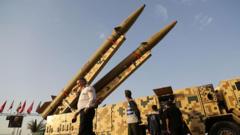
The concept of limited warfare represents a middle ground in Iran's strategic options. Rather than pursuing either complete capitulation through diplomatic channels or risking the catastrophic consequences of direct military confrontation, Iranian leadership sees potential in maintaining sustained pressure through proxy forces, asymmetric tactics, and calculated provocations. This approach allows Iran to project power regionally while theoretically maintaining plausible deniability and minimizing the risk of triggering American military intervention on a devastating scale.
Iran's historical experience shapes this perspective. Decades of sanctions, military encirclement, and perceived American hostility have convinced Iranian strategists that the US respects only displays of strength and resolve. From this viewpoint, backing down or pursuing accommodation signals weakness rather than pragmatism. Limited conflict with the US therefore serves as a demonstration of national pride and capability.
Regional Power Dynamics and Strategic Leverage
Through proxies in Yemen, Syria, Iraq, and Lebanon, Iran has developed a network that allows it to maintain constant pressure without direct confrontation. These asymmetric capabilities provide leverage in negotiations while distributing the costs and risks of conflict. The Houthi forces in Yemen, various militias in Iraq, and Hezbollah in Lebanon serve as Iran's forward operating system in regional competition.
This decentralized approach to conflict management offers several advantages. First, it allows Iran to maintain deniability regarding direct involvement in hostile acts. Second, it spreads American military resources across multiple theaters. Third, it demonstrates Iran's capacity to inflict costs on American interests without triggering responses proportionate to an actual military invasion or direct assault on US territory.
Economic and Domestic Considerations
Domestically, maintaining a posture of defiance against the United States resonates with segments of Iran's population and validates the revolutionary ideology upon which the Islamic Republic was founded. Continuous conflict, even if limited in scope, provides justification for military spending, security apparatus expansion, and restrictions on civil liberties that might otherwise face domestic criticism.
Economically, while sanctions remain devastating, they also serve Iran's internal politics. A nation under siege requires discipline and centralized control. The external threat narrative, reinforced by actual confrontations and military buildups, helps consolidate state power and suppress internal dissent that might otherwise emerge regarding governance failures or economic mismanagement.
American Response and De-escalation Risks
The United States faces its own strategic dilemma in responding to Iran's limited conflict approach. Overreacting to provocations risks escalating toward unintended war. Underreacting suggests tolerance of Iranian aggression and emboldens further action. This asymmetry in incentives means Iran can maintain pressure while the burden of restraint falls heavily on American decision-makers.
Furthermore, American military commitments across the globe and domestic political divisions limit Washington's ability to sustain prolonged Middle Eastern engagement. Iran's strategy implicitly assumes that American patience, resources, and political will for sustained conflict in the region have limits, whereas Iran's revolutionary government operates under different constraints and timescales.
The Paradox of Peace Versus Controlled Tension
From Iran's perspective, peace agreements or normalized relations with the United States would require substantial compromises. Nuclear programs would face restrictions, regional activities would come under scrutiny, and military capabilities would be subject to international oversight. These constraints might appear less acceptable to Iranian leadership than the current state of managed conflict.
Additionally, peace would eliminate the narrative of external threat that justifies current governance structures. A generation of Iranians has grown up understanding the world through the lens of American hostility. Suddenly reversing this narrative could create legitimacy questions for the regime itself.
Conclusion: The Sustainability Question
Whether Iran's strategy of limited conflict with the US proves sustainable remains uncertain. Miscalculation, unexpected escalation, or changes in American political leadership could quickly transform managed tension into uncontrolled warfare. Nevertheless, from the perspective of current Iranian strategic thinking, accepting these risks appears preferable to the constraints and compromises that genuine peace would require.