Trump Administration Blocks New Chinese Humanoid Robots
Trump administration implements ban on new Chinese humanoid robots amid US-China AI competition. Latest restrictions on advanced robotics technology.
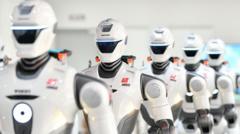
Trump Administration Implements Sweeping Ban on Chinese Humanoid Robots
The Trump administration has announced a significant policy restricting the importation and deployment of Chinese humanoid robots, escalating tensions in the ongoing technological rivalry between the United States and China. This decisive action marks another critical chapter in the broader competition for dominance in artificial intelligence and robotics innovation.
Understanding the Global Robotics Race
The United States and China are engaged in an intensifying competition to establish leadership in robotics and artificial intelligence technologies. Both nations recognize that mastery of these sectors will determine economic prosperity and geopolitical influence in the coming decades. The race encompasses autonomous systems, machine learning capabilities, and humanoid robotic platforms designed for industrial, commercial, and potential military applications.
Chinese humanoid robots have made remarkable technological advances in recent years, with several companies developing sophisticated machines capable of performing complex tasks. These developments have alarmed American policymakers who fear that allowing unrestricted access to such technology could compromise national security and economic competitiveness.
Strategic Implications of the Ban
The restriction on Chinese humanoid robots reflects growing concerns within the Trump administration about intellectual property theft, supply chain vulnerabilities, and technological dependency. Officials argue that advanced robotics represent critical infrastructure with dual-use applications that could impact national security.
This measure aligns with broader policies aimed at limiting Chinese technological advancement in strategic sectors. The administration has previously implemented restrictions on semiconductor sales, cloud computing services, and artificial intelligence software to protect American technological interests.
Impact on the Robotics Industry
The ban creates significant obstacles for American companies seeking to integrate advanced Chinese humanoid robots into their operations. Manufacturing facilities, research institutions, and technology firms that relied on these systems must now identify alternative solutions or seek special exemptions from government authorities.
Industry analysts warn that the restriction could slow innovation in certain sectors while pushing costs higher for American businesses dependent on cutting-edge robotic solutions. However, supporters of the policy contend that short-term economic challenges are justified by long-term national security benefits.
Chinese Response and Counteractions
China's government has criticized the ban as protectionism that violates international trade principles. Chinese technology companies have pledged to accelerate domestic innovation and expand market presence in regions outside American jurisdiction, including Europe and Asia-Pacific nations.
Future of US-China Technology Competition
The ban on Chinese humanoid robots signals that technological competition between the superpowers will intensify rather than diminish. Both nations continue investing heavily in artificial intelligence research, autonomous systems development, and next-generation robotics. The stakes encompass not merely commercial advantage but fundamental questions about technological sovereignty and global influence.
As this competition evolves, expect additional regulatory measures from Washington targeting Chinese technology exports, while Beijing pursues alternative markets and accelerates indigenous capability development in robotics and artificial intelligence sectors.