Suffolk Wildfire Spreads Uncontrollably: Fire Service Issues New Update
Suffolk wildfire continues expanding with unpredictable spread. Fire service warns of additional 48-hour response needed. Latest updates on the coastal emergency.
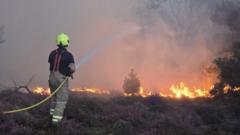
Suffolk Wildfire Remains Uncontrollable and Volatile
Emergency responders are battling an intensifying Suffolk wildfire that continues to exhibit unpredictable growth patterns along the coastal region. According to statements released by the fire service, the situation remains highly volatile as firefighting crews work around the clock to contain the rapidly expanding flames.
Extended Emergency Response Timeline
Officials have confirmed that firefighting personnel will maintain an active presence at the Suffolk wildfire scene for a minimum of 48 additional hours. This extended deployment underscores the severity and complexity of the current fire situation, which has proven more challenging to manage than initially anticipated.
Unpredictable Fire Behavior Complicates Control Efforts
The primary concern hampering containment efforts is the inherently unpredictable nature of the wildfire's spread. Fire service specialists report that atmospheric conditions, wind patterns, and terrain characteristics continue to create challenging variables that affect firefighting strategies. The coastal location of the blaze introduces additional complexities, as maritime weather systems can rapidly alter fire behavior and spread trajectories.
Current Operational Challenges
Firefighting teams confronting the wildfire spread acknowledge that traditional containment protocols require continuous adaptation. The dynamic environment demands real-time assessment and rapid tactical adjustments to protect nearby communities and critical infrastructure. Fire service personnel are deploying advanced monitoring equipment to track the fire's movement patterns and anticipate potential directional changes.
Resource Mobilization and Support
To address the escalating fire service Suffolk emergency, multiple fire stations have redirected resources toward the affected coastal area. Inter-agency coordination involves regional firefighting units, emergency medical services, and environmental protection teams working collaboratively to maximize containment effectiveness.
Community Safety Measures
Residents in proximity to the coastal fire emergency have received preliminary advisories regarding potential evacuation procedures. Local authorities are maintaining heightened readiness protocols while monitoring the wildfire's progression. Emergency management officials emphasize that preparedness measures remain essential given the unpredictable characteristics of the ongoing situation.
Technical Assessment of Fire Behavior
Fire service analysts indicate that the unpredictable wildfire demonstrates characteristics typical of uncontrolled vegetation fires in coastal environments. Factors including fuel load density, moisture content variations, and atmospheric pressure systems contribute to the fire's erratic behavior patterns. Understanding these dynamics is critical for predicting potential spread and implementing preventive measures.
Firefighting Strategies and Tactics
Emergency response teams are employing specialized firefighting methodologies designed for challenging terrain and volatile conditions. These strategies prioritize life safety, property protection, and environmental conservation simultaneously. The extended 48-hour commitment reflects the comprehensive nature of the response required to stabilize the situation.
Future Outlook and Monitoring
Fire service leadership maintains vigilant oversight of the Suffolk wildfire development, with continuous reassessment occurring throughout operational periods. Weather forecasting services are being consulted to anticipate atmospheric changes that could influence fire behavior. Authorities remain committed to transparent communication regarding the emergency status and anticipated timeline for full containment.